
Note: this article contains AI-generated photos.
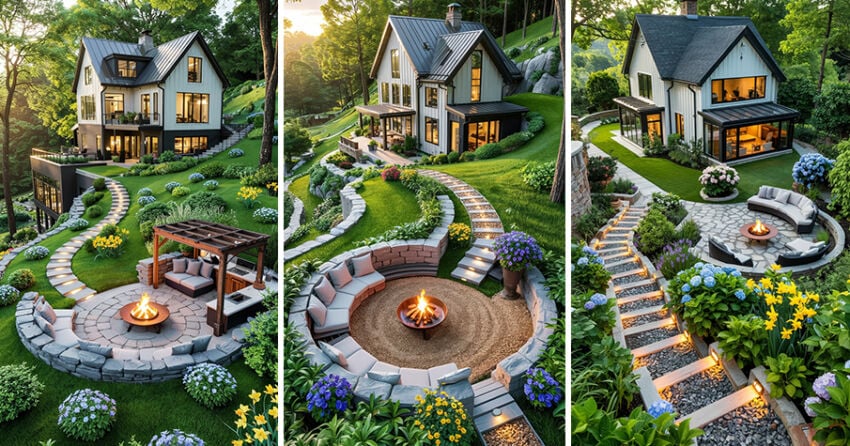
Can a sloped landscape be turned into a stunning retreat? I believe it can, and I’m excited to share how.
Building a home on a hillside has its challenges. But it also brings chances for creative design. You can make levels by terracing the land. This includes a level for your home and another for a peaceful backyard.
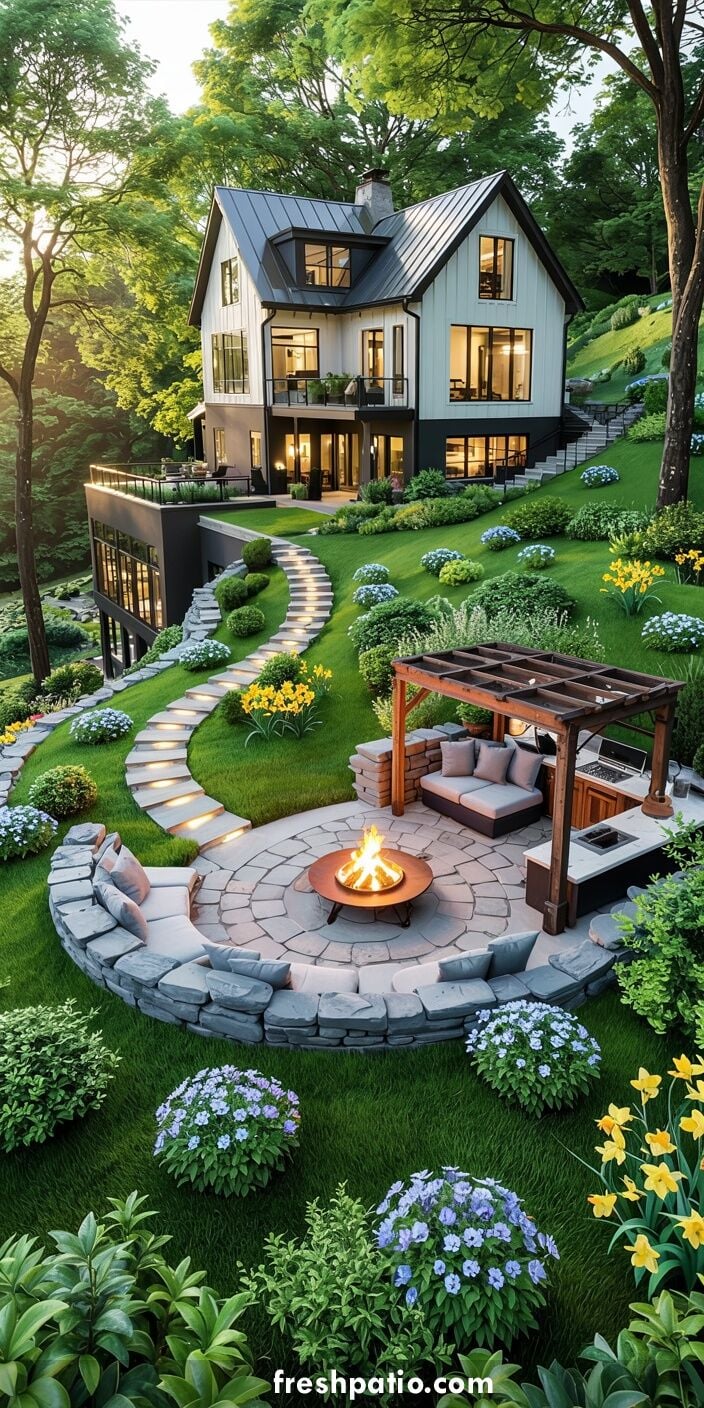
Inspired by designs like the Slope Point Farmhouse Plan, you can make your sloped land beautiful and useful. With careful planning, your farmhouse can look great with the land around it.
Embracing the Challenge: The Beauty of Hillside Architecture
Hillside architecture is exciting. It turns a tough terrain into a stunning home. Building on a slope has its own special benefits.
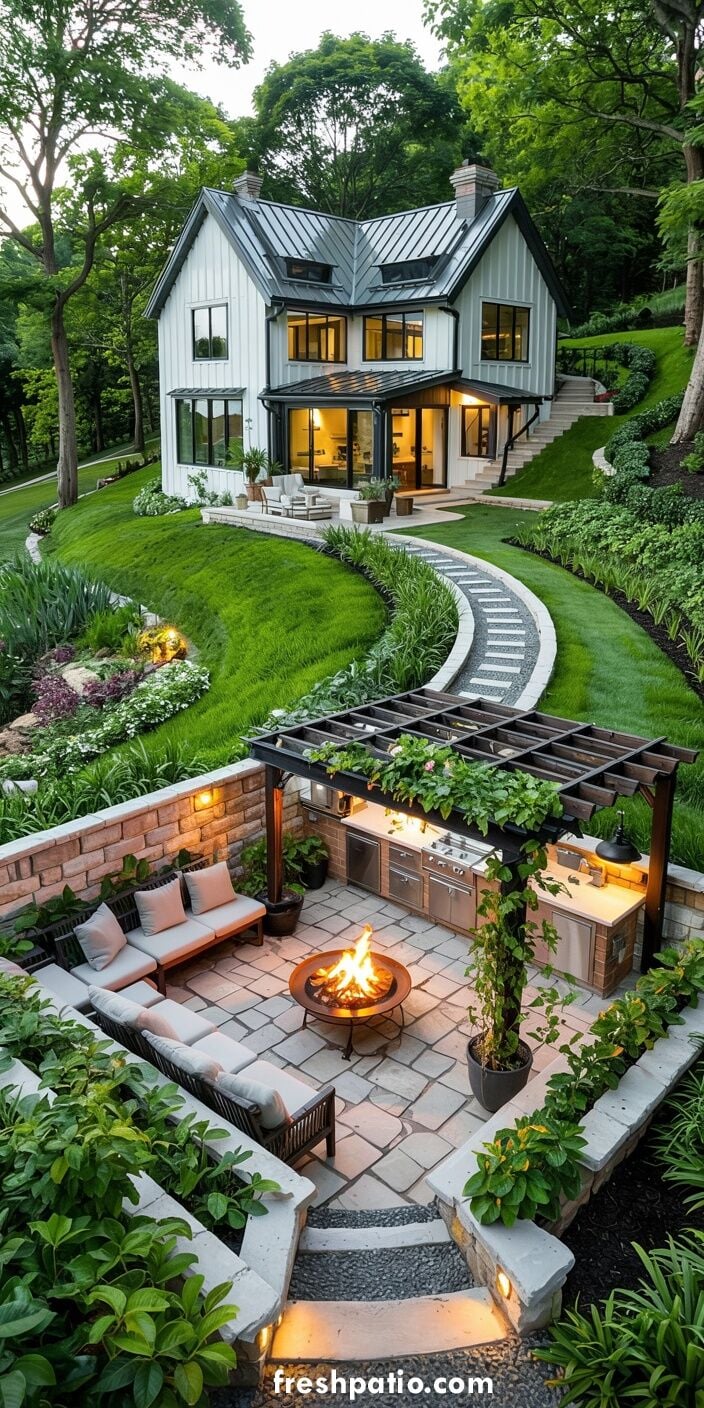
The Unique Appeal of Elevated Living
Living on a hill gives you amazing views. It also feels private and peaceful. A modern farmhouse on a slope can blend indoor and outdoor spaces beautifully.
Turning Terrain Challenges into Design Opportunities
Steep terrain can be a design chance. Terracing adds levels and interest. A farmhouse built into a hill can also use natural drainage. This makes the design more sustainable.
Architects and homeowners can make a special space. It fits well with its surroundings and shows off the beauty of living high up.
Understanding Terrain: Assessing Your Sloped Property
First, you need to check your sloped property. This step is key to building a modern farmhouse that works well with the land. It helps find problems and chances, making sure your home is safe and strong.
Types of Slopes and Their Implications
Slopes can be different based on how steep they are and where they face. Knowing your slope type is important. It changes how you design and build your farmhouse. For example, a very steep slope might need more digging or special foundations.
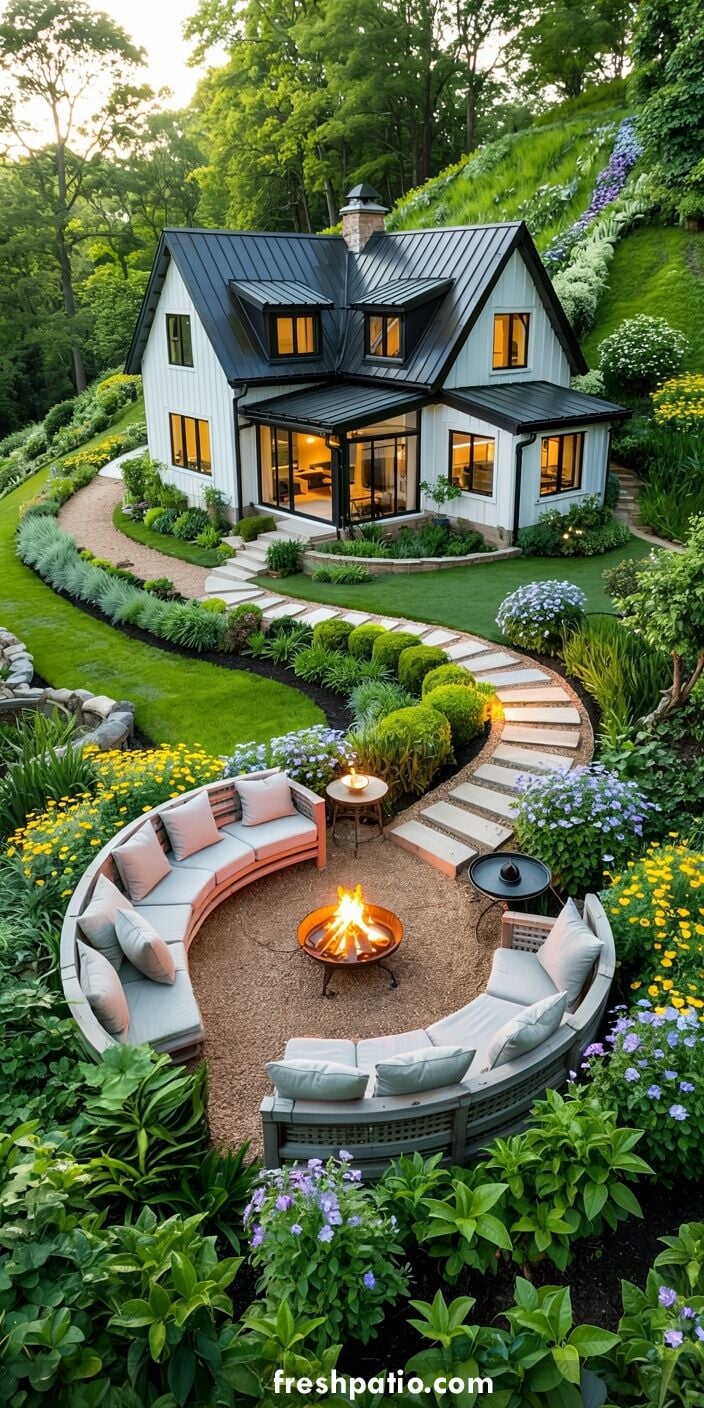
Soil Composition and Drainage Considerations
Soil type is very important for slope stability. Soils can be more or less solid and let water through differently. Knowing your soil helps you pick the right ways to drain water and build your foundation.
Working with Natural Contours
Using your land’s natural shape can make your farmhouse better and more green. By understanding your property’s natural flow, you can build a home that fits the land well. This makes your farmhouse look good and work well with the land.
Designing a Modern Farmhouse on a Slope: Architectural Principles
A modern farmhouse on a slope has special design needs. It’s all about how the land and the house work together.
Multi-Level Foundations and Structural Considerations
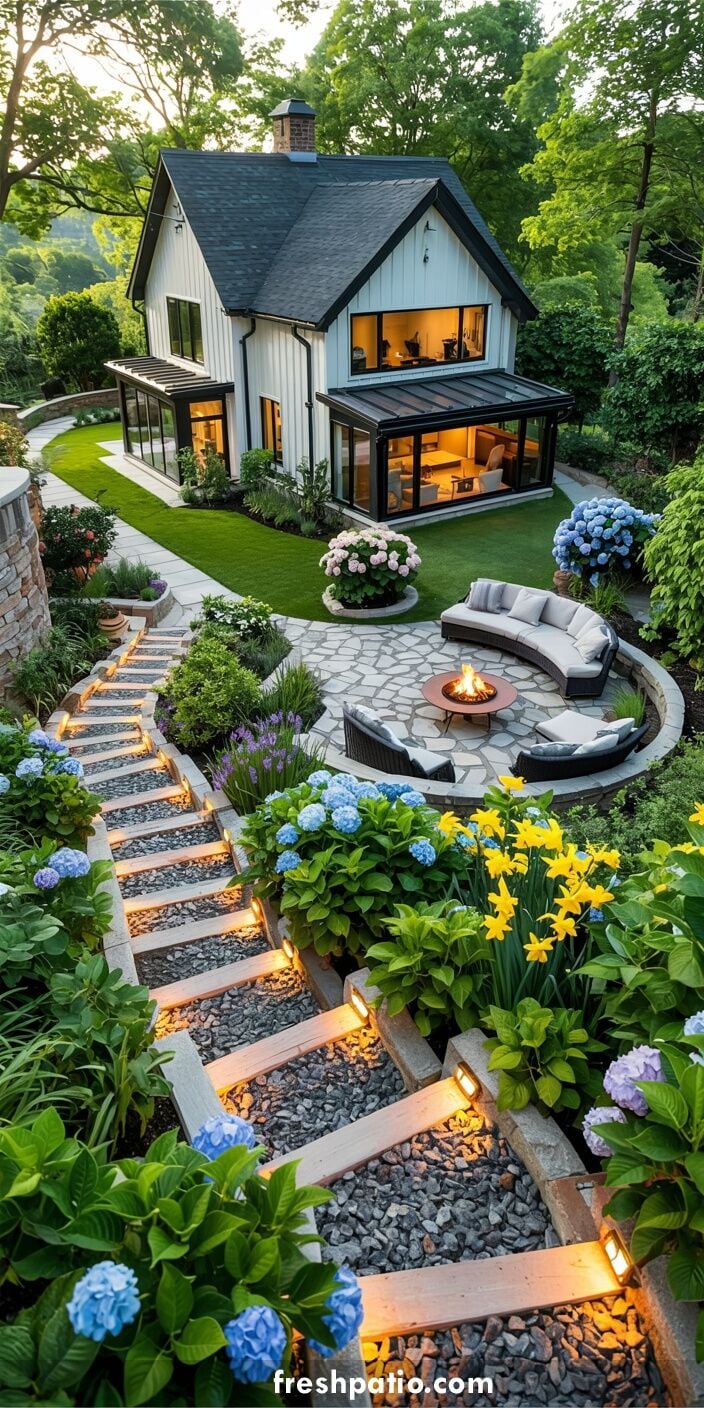
When building a modern farmhouse on a slope, the foundation is key. You might need a multi-level foundation to keep the house stable. This could mean:
- Building walls to make a flat area for the house
- Using special supports to reach solid ground
- Creating a foundation that follows the slope
Maximizing Views and Natural Light
A modern farmhouse on a slope can have amazing views and lots of light. Big windows, skylights, and outdoor areas help make the inside bright. Think about:
- Placing living areas where you can see the best views
- Adding windows that let in light but keep things private
- Making outdoor spaces that feel like part of the house
Blending Traditional Farmhouse Elements with Contemporary Design
The outside of a modern farmhouse should mix old and new. You can use classic materials and shapes, like:
- Wood or metal for the siding
- Roofs that look like they’re from old times
- Modern takes on old farmhouse features, like big porches
Terracing Techniques: Creating Functional Tiers
Terracing is key for hillside properties. It makes the area look good and useful. It turns a slope into levels, adding space around a modern farmhouse.
Planning Your Terrace Layout
Start with a good plan for terracing. Know the slope’s steepness and how many levels you need. Think about what each level will be for, like gardens or views.
It’s smart to get a landscape architect. They help make sure the terracing fits with the farmhouse.
Retaining Wall Options and Materials
Choosing the right retaining wall is important. You can pick from concrete, natural stone, or timber. Each has its own benefits, like how long it lasts or how it looks.
Concrete Solutions for Durability
Concrete walls are strong and can look good. They come in many textures and colors. They’re great for big terracing jobs.
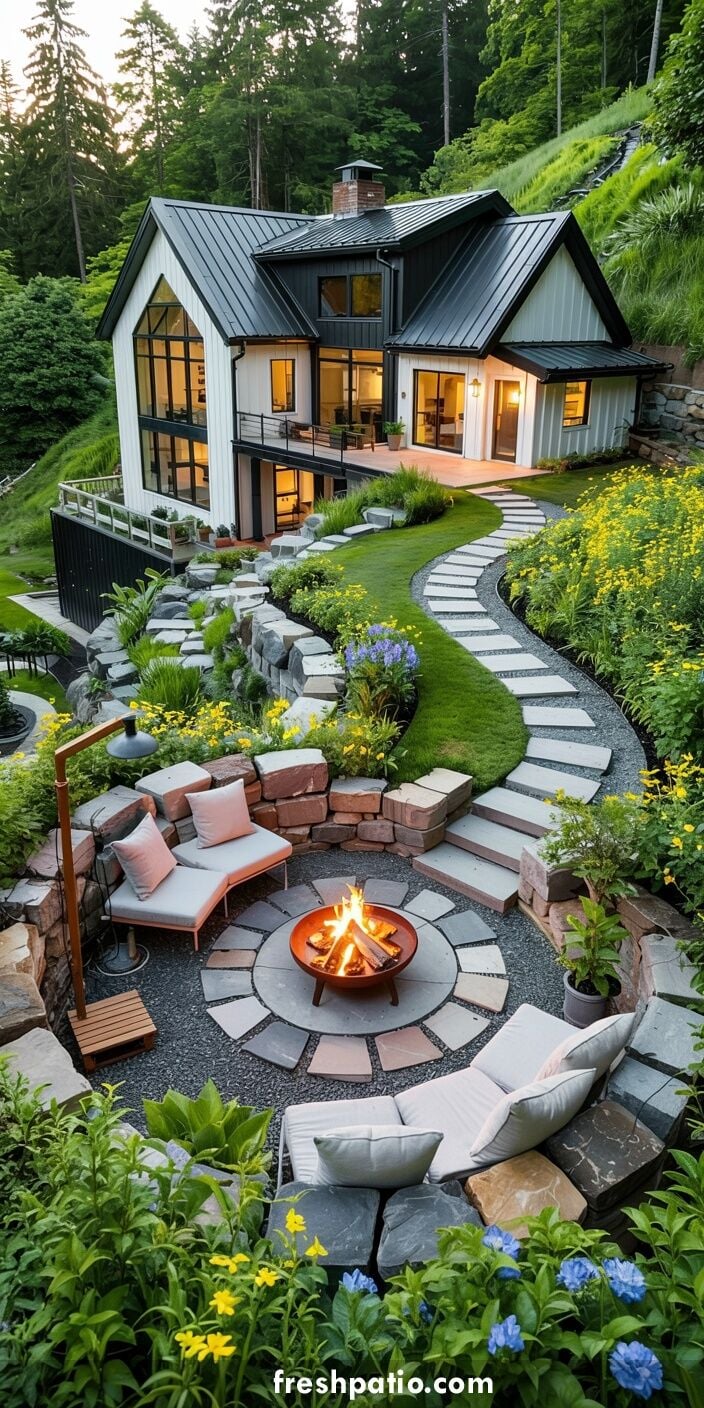
Natural Stone for Rustic Appeal
Natural stone walls have a classic look. They fit well with nature, making a smooth transition.
Ensuring Proper Drainage Between Tiers
Drainage is key to stop water problems between levels. Water can cause erosion and harm the walls. Use drainage pipes and make sure each level slopes right.
Always talk to a pro for the best drainage plan. It should work with your terracing.
Connecting the Levels: Walkways and Staircases
In a modern farmhouse on a slope, walkways and staircases are key. They make the place look good and safe to move around.
Designing Safe and Accessible Pathways
When making walkways and staircases, safety and easy access come first. Choose materials that grip well, even when wet. Also, make sure they are well-lit.
Outdoor lights that run on the sun are good for the planet and work well.
Material Selection for Durability and Style
What you pick for walkways and staircases matters a lot. Stone, brick, and hardwood are top picks for their lasting quality and looks. For example, stone walkways can match the natural scenery, making everything look connected.
Landscaping Along Connecting Elements
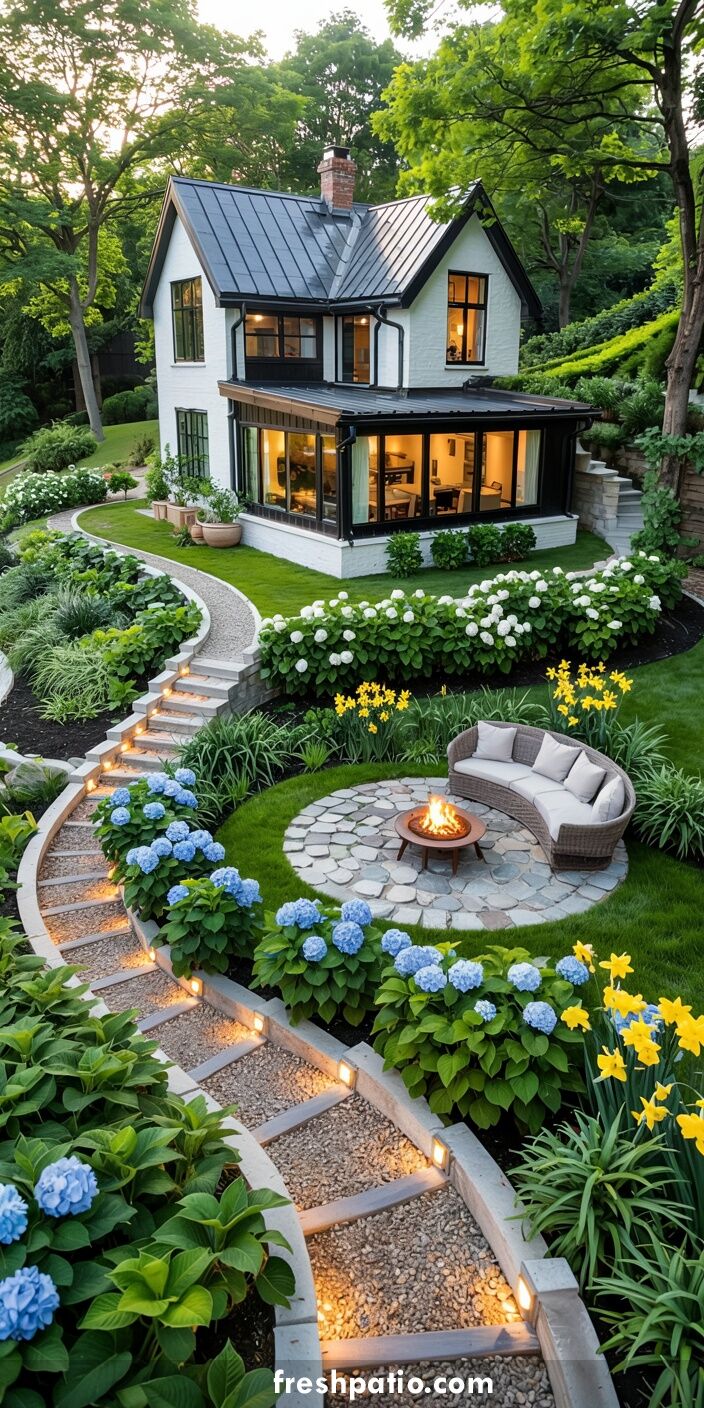
Adding plants to walkways and staircases makes the place look even better. Pick plants that do well on slopes and don’t need much care.
Flower Selections for Sloped Gardens
For gardens on slopes, creeping thyme and sedum are great. They bring color and texture and help keep the soil in place.
Ornamental Grasses and Ground Covers
Ornamental grasses and ground covers like liriope and vinca minor are good for slopes too. They’re tough, need little care, and make the landscape lively.
Creating the Ultimate Tiered Backyard Retreat
I dream of a home on a slope with a tiered backyard. It’s a smart use of space and looks great too.
Designing a Multi-Functional Patio Space
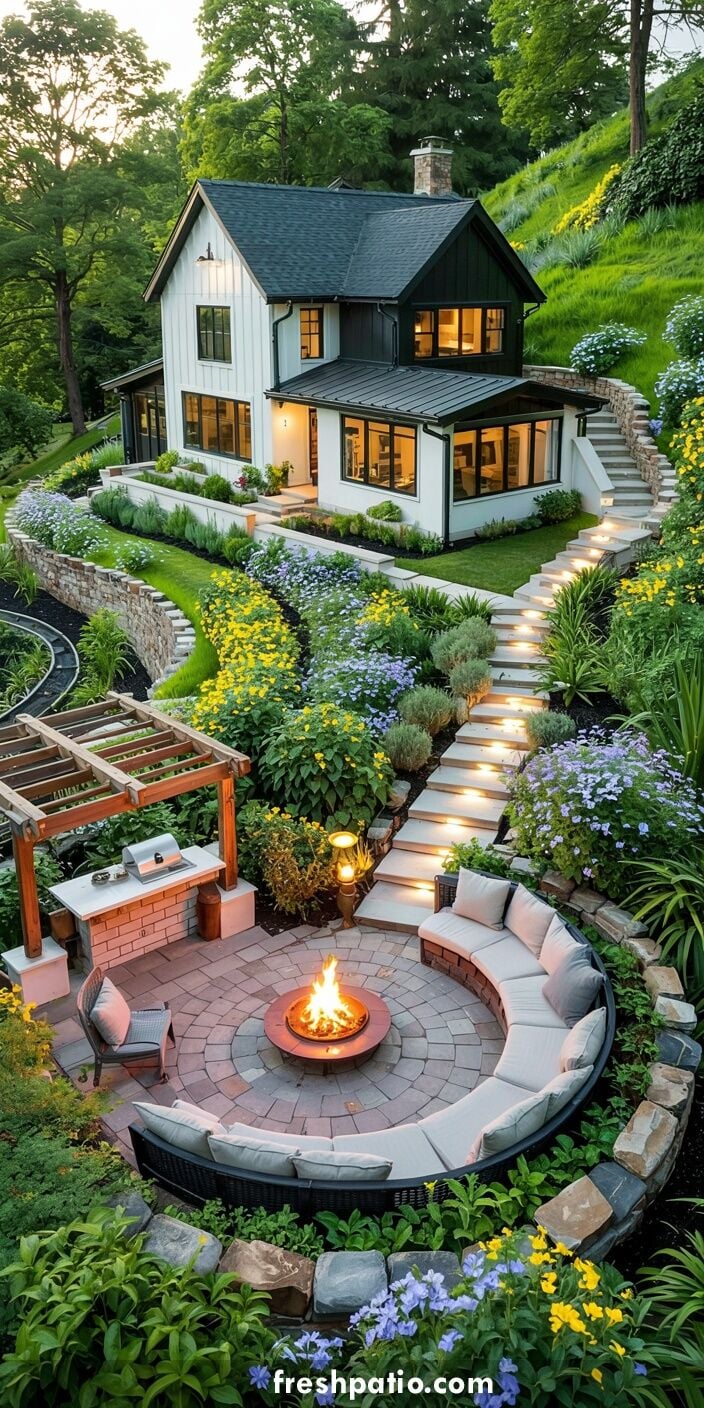
Creating a tiered backyard starts with a multi-functional patio. You need areas for eating, relaxing, and fun.
Outdoor Living Elements
Adding outdoor living elements makes the patio better. These include:
Fire Pit and Cozy Seating Areas
- A fire pit adds warmth and makes gatherings cozy.
Pergolas and Shade Structures
- They keep you cool and add beauty to your space.
Outdoor Kitchen and Grilling Stations
- They make cooking outside easy and fun.
Luxury Additions
For a fancy tiered backyard, add luxury touches. Think about:
Hot Tub Integration on a Slope
- A hot tub is relaxing. But, it needs special care on a slope.
Outdoor Shower Designs
- An outdoor shower is refreshing. It adds luxury to your space.
With these features, your tiered backyard becomes a special part of your home. It’s a place for fun and relaxation.
From Vision to Reality: Bringing Your Hillside Farmhouse Dreams to Life
Thinking about a modern farmhouse on a slope makes me think of planning and expertise. Working with pros like architects and landscapers is key. They help make sure your design works well with the slope’s challenges and chances.
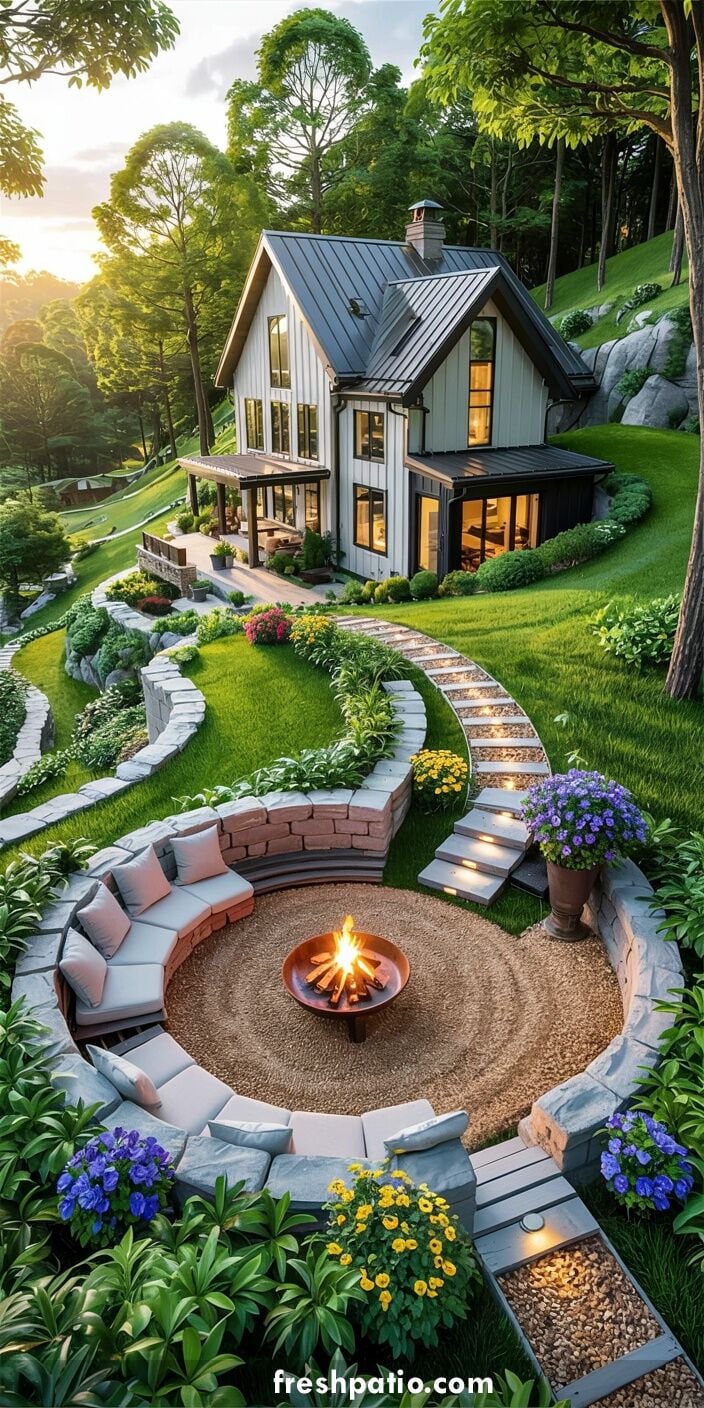
Using terracing, you can make a space that’s both useful and pretty. A smartly designed hillside farmhouse looks great with the land. It also makes your property look better.
To make your dream come true, mix old and new styles. With the right help, you can build a modern farmhouse that’s beautiful and useful. Your hillside farmhouse dreams can become real.


